Your Cart is Empty
One elastic side panel. A low stacked heel. A pull-tab at the back instead of laces. No buckles either, just step in and go. That’s a Chelsea boot, stripped down to basics. Sparks Hall, Queen Victoria’s shoemaker, built the first one in the 1830s, and the Beatles brought it roaring back a century later. Want something different? Jodhpur boots add an ankle strap. Men’s Chukka boots swap in eyelets and laces instead.
Leather chelsea boots are the core of this collection, full stop. Full grain leather is the reason: it holds its shape for years, where a lesser hide cracks within a season. Black comes first for formality. Pair it with a suit and the clean single-panel upper reads sharp under tailored trousers. Mens brown leather chelsea boots sit a notch more casual, built for chinos or dark denim. Tan leather chelsea boots go warmer still, better once the weather turns and a lighter shade actually works with the rest of an outfit. Same leather throughout. What changes is the shade, and the shade is what decides how formal the boot reads.
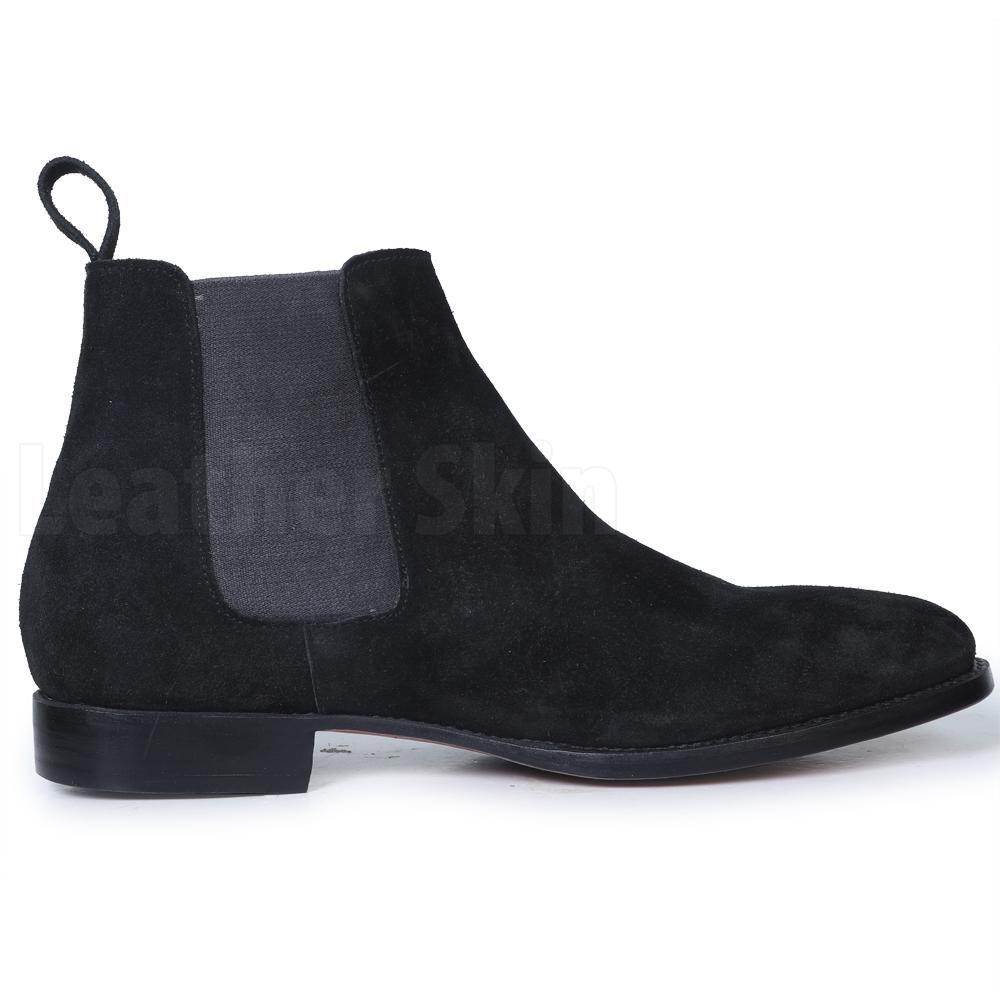
No shine here. Suede chelsea boots trade the leather's sheen for a soft, brushed nap, casual from the first wear. Mens suede chelsea boots go straight to jeans or corduroy, no thinking required. Mens tan suede chelsea boots take that a step further: texture and warm shade, working together instead of against each other, and it's the standout combination in the range. One catch. Suede wants more care than leather. Brush it after every wear, keep it out of heavy rain, and it holds its colour and texture for years.
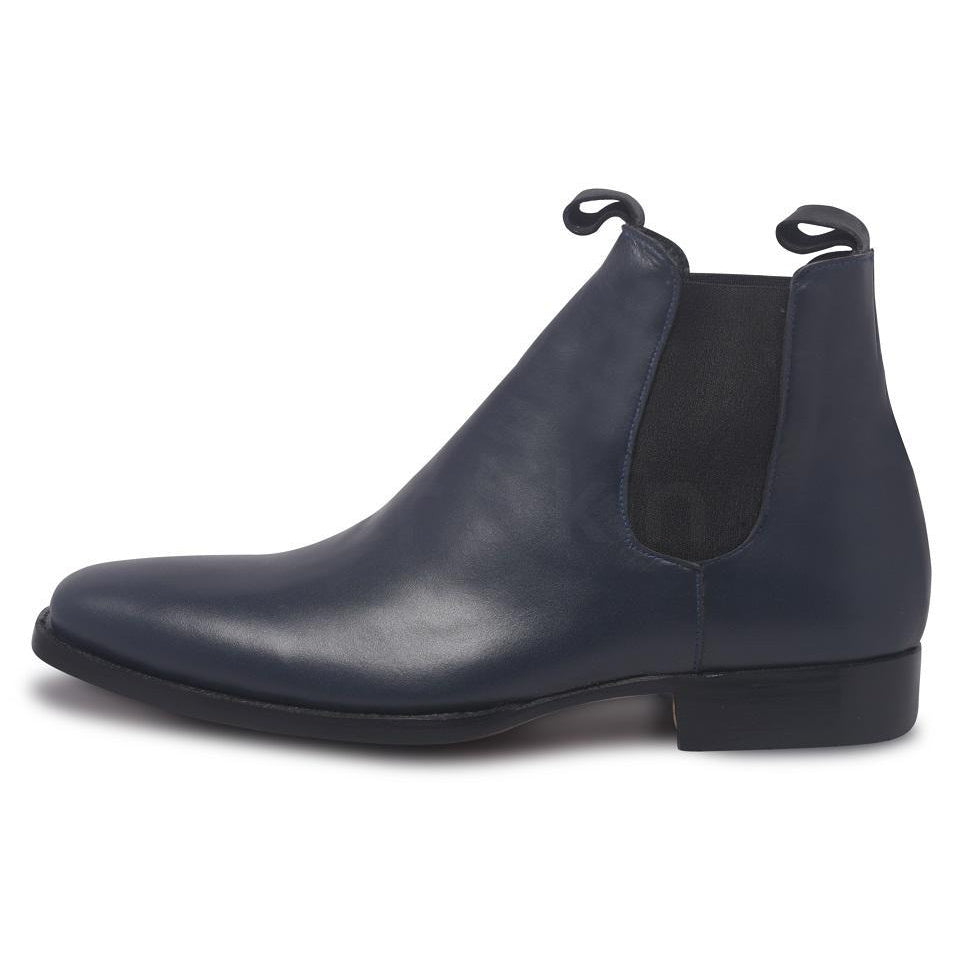
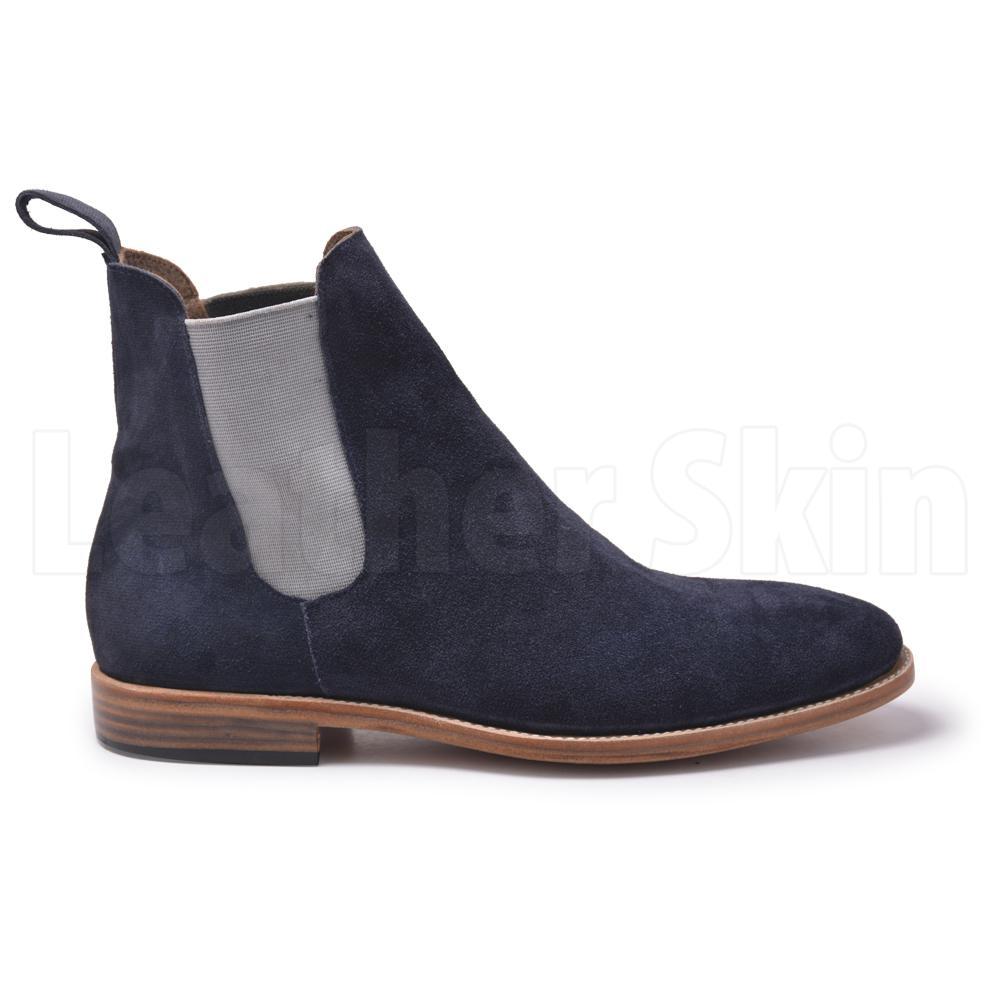
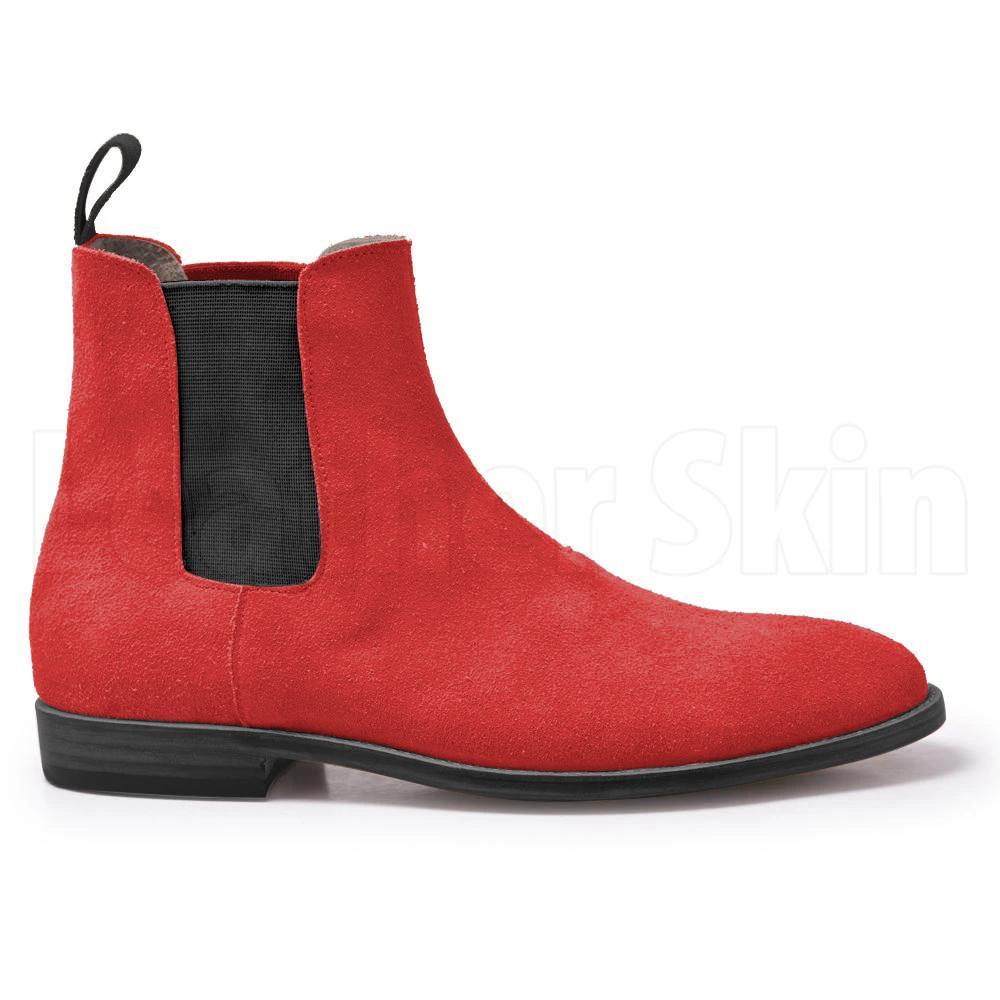
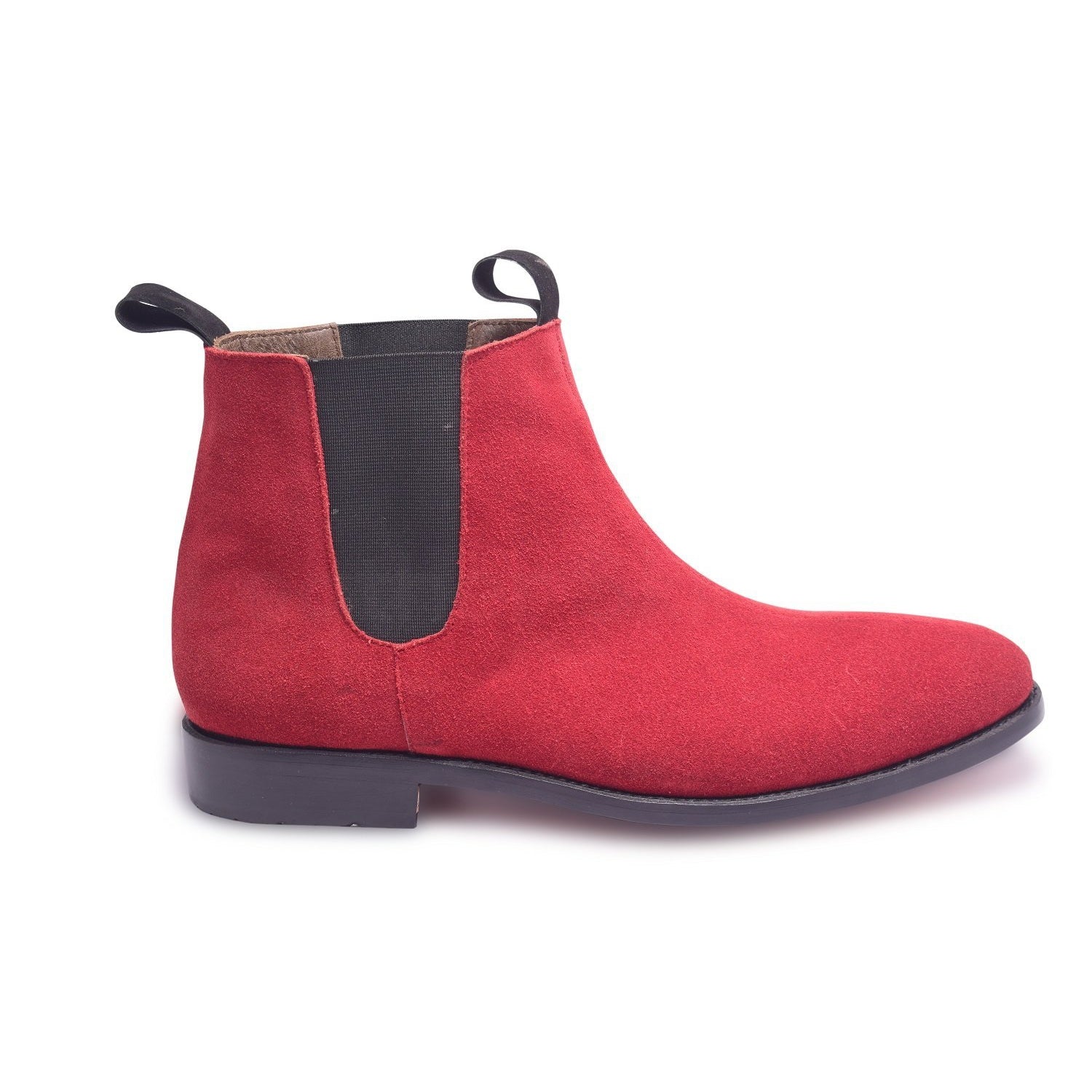
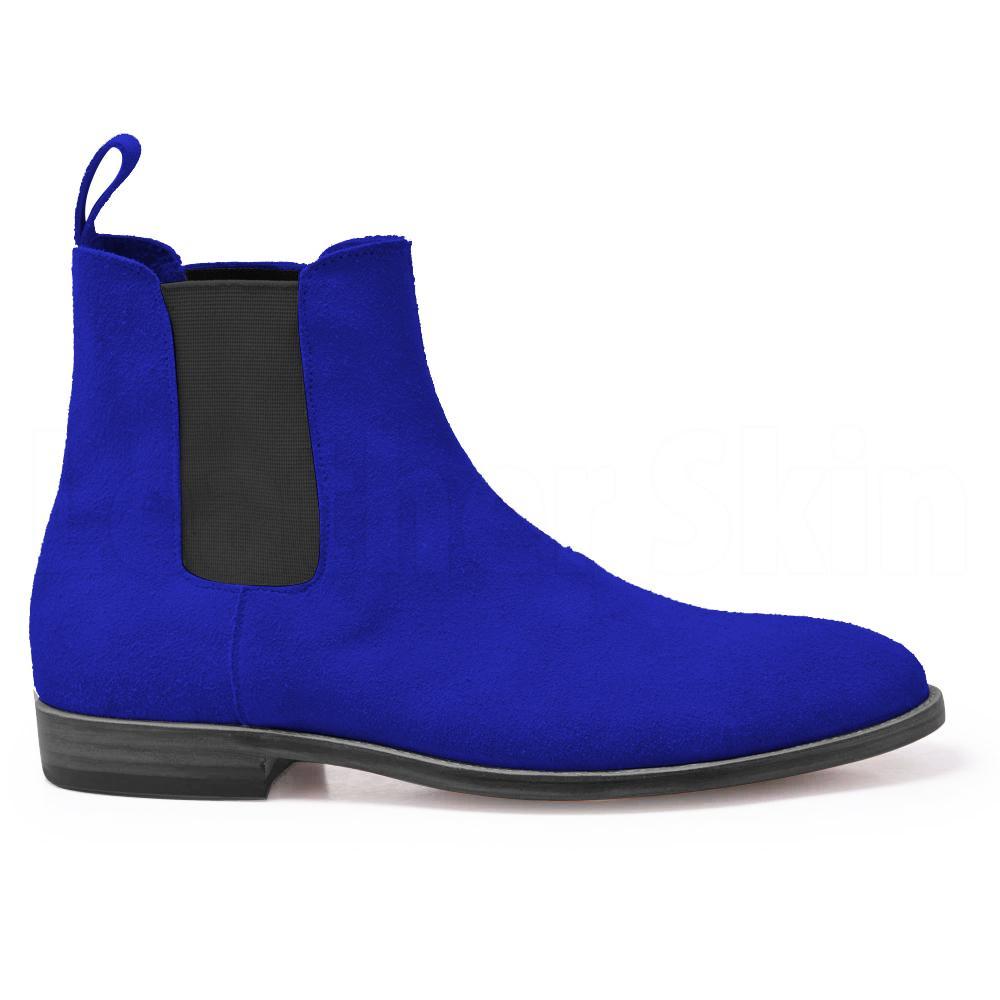
Then there's the bolder end of the range. Red chelsea boots mens, blue chelsea boots mens, styles built to be noticed, not blended in. Wear them with an outfit that's ready to let them do that. Green leather chelsea boots settle down a bit, especially in a darker forest shade. Grey chelsea boots sit closer to neutral, for anyone who wants colour without fully committing to it. Burgundy. Taupe. Khaki. That's the seasonal edge of the collection, right there.
A bit of height changes things. Heeled chelsea boots for men trace back to the Cuban heel, the shape the Beatles made famous in the 1960s, and it adds a slight taper a flat sole never gives you. Cuban heel chelsea boots keep that lineage alive today. Chunky chelsea boots go the other way entirely: thicker, more grounded, built for wear that doesn't need finesse. Sole matters here too. Rubber if it's casual. Leather if there's a suit involved.
Black means formal. That’s the whole rule. A suit, an office, a leather sole, a clean silhouette, nothing about it should draw attention. Brown and tan slide into smart-casual instead, at ease with chinos or jeans that aren’t too baggy around the ankle. Maybe a full lace-up fits your office better than a boot does.
If so, oxford shoes and men’s brogue shoes or Derby shoes cover the same ground with a different silhouette — each offering a lace-up formal finish that a Chelsea boot deliberately avoids. Monk strap shoes split the difference — a buckle closure, no laces, and a formal enough silhouette to sit alongside a suit without the slip-on ease of the Chelsea.
Want something slip-on for a smarter casual occasion without the boot formality? Men's loafers sit at that exact point — no laces, no buckle, and smart enough for chinos or a suit at the more relaxed end of the dress code.
Want something taller and rougher around the edges? Men's Motorcycle boots are right there waiting — built taller through the ankle, heavier in the sole, and designed to handle wear that a Chelsea boot's elastic panel was never cut out for. For something even more utility-focused, tactical boots add reinforced toe caps, side zips, and outsoles built for rough terrain rather than a city pavement.
For a cleaner everyday boot that keeps the zip convenience without the utility bulk, men's zipper boots give you a streamlined ankle boot silhouette that sits closer to a Chelsea in formality while adding a side-zip fastening for an easier on-off than laces.
An ankle-height boot. One elastic panel on each side, a pull-tab at the back, no laces and no buckles anywhere. It goes back to the 1830s, and it came roaring back into fashion in the 1960s once the Beatles started wearing it everywhere.
Leather if you want something clean enough for a suit. Suede if casual is the goal, since the nap is softer and pairs naturally with denim. Most people end up owning both eventually, but if it's a first pair, leather stretches further across more occasions.
Both, honestly. It comes down to colour and material more than the shape itself. Black leather reads formal enough for a suit. Brown, tan, and suede lean the other way, comfortable with chinos or jeans and not trying to look dressed up. If the formality requirement is stricter than even a black Chelsea can satisfy, our men's leather shoes collection covers every lace-up and slip-on option that sits unambiguously in formal territory.
Black or brown, almost always. Both work across formal and smart-casual without any real thought involved. Save the more adventurous shades, tan, suede, red, blue, for a second or third pair, once the basics in your closet are already covered. And if your wardrobe leans western rather than urban, custom cowboy boots built to your measurements are a more natural starting point than a Chelsea boot would ever be.
Chelsea boots skip fastenings entirely, relying on elastic instead. Jodhpur boots add a strap around the ankle for a closer fit. Chukka boots go a different route altogether, using eyelets and laces, which gives them a slightly more formal, structured look.
Leather, if there's a suit anywhere near the outfit. It sits slimmer and reads more formal underfoot. Rubber wins for anything daily, since it grips better and simply lasts longer against regular walking, rain, and everything else a normal day throws at it.